


Volumetric measurement plays a crucial role across numerous fields—from chemistry labs and manufacturing plants to cooking and construction projects. Understanding how to accurately measure volume ensures precision, safety, and efficiency in countless applications.
In this comprehensive guide, we’ll explore what volumetric measurement means, the common tools and methods used, and the practical importance of precise volume calculation. Whether you’re a student, professional, or hobbyist, mastering volumetric measurement is key to achieving reliable results in your work or projects.
What Is Volumetric Measurement?
Volumetric measurement refers to the process of determining the volume—how much space an object or substance occupies. This can apply to liquids, gases, and solids. Volume is a fundamental physical property typically expressed in cubic units like liters (L), milliliters (mL), cubic meters (m³), or cubic centimeters (cm³).
Volume measurement can be direct, using tools designed to hold or displace a known volume, or indirect, calculated from other dimensions such as length, width, and height.
Common Units of Volume
- Liter (L)
- Milliliter (mL)
- Cubic meter (m³)
- Cubic centimeter (cm³)
- Gallons, quarts, pints (imperial/US customary units)
Why Is Volumetric Measurement Important?
Accurate volumetric measurement is vital because it directly affects quality, safety, and performance in many areas:
- Scientific Research: Experiments rely on precise volumes for reproducibility and valid conclusions.
- Medicine: Proper dosage calculations ensure patient safety.
- Food and Beverage: Recipes require correct ingredient volumes for flavor and texture.
- Manufacturing: Materials must be measured to exact volumes to maintain product consistency.
- Construction: Concrete, paint, and other materials depend on volume measurements for proper application.
Tools and Techniques for Volumetric Measurement
Volumetric measurement techniques vary widely depending on the substance, accuracy requirements, and context. Here are the most common methods and instruments:
1. Volumetric Flasks
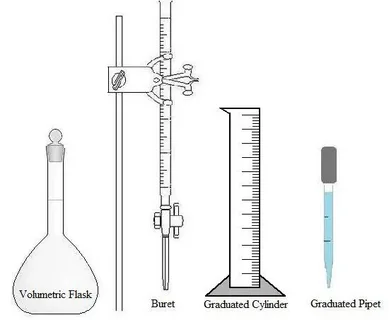
Volumetric flasks are precision glassware used mainly in laboratories for preparing solutions with a specific volume. They have a narrow neck with a calibration mark indicating the exact volume.
- Advantages: High accuracy and repeatability.
- Common volumes: 10 mL to 2 L.
2. Graduated Cylinders
Graduated cylinders are cylindrical containers marked with volume gradations. They allow users to measure various liquid volumes by reading the meniscus at eye level.
- Advantages: Versatile, easy to use.
- Accuracy: Moderate (less than volumetric flasks).
3. Pipettes and Burettes
Pipettes transfer a fixed or variable volume of liquid, often with high precision. Burettes are used in titrations to dispense measured amounts of liquid slowly.
- Advantages: Precise volume control.
- Commonly used in chemical analysis.
4. Measuring Cups and Spoons
Used primarily in cooking and general purposes, measuring cups and spoons provide volume estimates for liquids and dry ingredients.
- Advantages: Convenient and widely available.
- Accuracy: Less precise, suitable for non-critical uses.
5. Volumetric Measurement by Displacement
For irregular solids, volume can be measured by water displacement: submerging the object in water and measuring the increase in water volume.
- Useful for solids that can’t be measured easily by dimension formulas.
How to Perform Accurate Volumetric Measurement
Accurate volumetric measurement requires attention to detail and proper technique. Here are key tips:
Read at Eye Level
When measuring liquids in graduated cylinders or flasks, always observe the meniscus—the curved surface of the liquid—at eye level to avoid parallax errors.
Use Appropriate Tools
Choose volumetric flasks or pipettes for high-precision needs. Use graduated cylinders or measuring cups for everyday tasks.
Calibrate Your Equipment
Ensure measuring devices are calibrated regularly to maintain accuracy. Calibration certificates may be necessary in professional settings.
Account for Temperature
Temperature affects volume, especially for liquids and gases. Many volumetric measurements are standardized at specific temperatures (usually 20°C). Adjustments or temperature-controlled measurements may be necessary.
Avoid Contamination
In chemical and medical uses, keep tools clean to prevent contamination, which can alter volume and concentration.
Volumetric Measurement in Different Fields
In Chemistry and Laboratories
Volumetric measurement is foundational in chemistry for preparing solutions and conducting titrations. Precise volume control influences reaction outcomes and concentration calculations.
In Medicine and Pharmaceuticals
Dosage calculations rely heavily on volumetric measurement, especially for liquid medications. Syringes, pipettes, and droppers provide controlled volume delivery.
In Cooking and Baking
Recipes often specify ingredient volumes rather than weights. Measuring cups and spoons help achieve consistent culinary results.
In Manufacturing and Engineering
Volumetric measurement ensures that components and raw materials meet specifications. For example, resin mixing or chemical batching requires exact volumes.
Environmental Science and Water Management
Accurate volume measurement of water samples, pollutants, or effluents is critical for environmental monitoring and compliance.
Understanding Errors and Limitations in Volumetric Measurement
Like all measurement techniques, volumetric measurement can be prone to errors. Common sources include:
- Parallax error: Misreading the meniscus due to incorrect eye angle.
- Temperature fluctuations: Affect liquid density and volume.
- Instrument precision: Limits of the measuring tool.
- Human error: Improper handling or reading.
Mitigating these errors involves proper training, calibration, and adherence to measurement protocols.
Volumetric Measurement Formulae for Solids and Liquids
When direct volumetric measurement is not possible, volume can be calculated using dimensional measurements.
| Object Shape | Volume Formula |
| Cube | V=a3V = a^3V=a3 (where aaa is side length) |
| Rectangular Prism | V=l×w×hV = l \times w \times hV=l×w×h |
| Cylinder | V=πr2hV = \pi r^2 hV=πr2h |
| Sphere | V=43πr3V = \frac{4}{3} \pi r^3V=34πr3 |
| Cone | V=13πr2hV = \frac{1}{3} \pi r^2 hV=31πr2h |
These formulas help calculate volume when dimensions can be accurately measured.
Advances in Volumetric Measurement Technology
Modern volumetric measurement has embraced technology, including:
- Digital volume meters: Electronic devices for liquid flow and volume measurement.
- 3D scanning and imaging: For irregular solids where displacement methods are impractical.
- Smart sensors and IoT devices: Provide real-time volume monitoring in industrial processes.
Summary: Best Practices for Volumetric Measurement
- Always choose the correct instrument for the required precision.
- Read measurements carefully at eye level.
- Keep equipment calibrated and clean.
- Consider environmental factors such as temperature.
- Use formulas for solids when direct volume measurement is not feasible.
- Stay updated with technological tools for better accuracy.
Volumetric measurement is a fundamental yet diverse process that underpins many scientific, industrial, and everyday activities. Mastering its principles ensures accuracy, reliability, and efficiency in all volume-related tasks.
If you want to deepen your understanding or explore specific volumetric measurement tools, feel free to ask!
