


Global Navigation Satellite Systems (GNSS) have become an essential part of modern navigation, communication, and positioning technologies. From smartphones to autonomous vehicles, GNSS plays a crucial role in ensuring accurate location information. To maintain the precision and reliability of these systems, GNSS system testing and calibration techniques are critical. This article explores the methodologies and tools used to test and calibrate GNSS systems effectively.
Understanding GNSS
GNSS refers to satellite-based systems that provide geolocation and time information to a GNSS receiver anywhere on or near the Earth. Popular GNSS systems include GPS (USA), GLONASS (Russia), Galileo (EU), and BeiDou (China). The accuracy of these systems depends on multiple factors, including satellite health, signal integrity, atmospheric conditions, and receiver performance.
Importance of GNSS System Testing
Testing GNSS systems ensures that devices receive accurate position, velocity, and time information. Improperly tested GNSS systems can lead to errors in navigation, timing applications, and safety-critical operations. GNSS system testing and calibration techniques help engineers detect signal distortions, multi-path errors, and hardware inaccuracies.
GNSS Testing Techniques
1. Field Testing
Field testing involves evaluating GNSS receivers under real-world conditions. Engineers measure signal reception quality, accuracy, and reliability by comparing the device’s output against known reference points. This technique provides insight into how environmental factors, such as urban canyons or dense foliage, affect GNSS performance.
2. Laboratory Testing
Laboratory-based testing uses controlled environments with GNSS signal simulators. These simulators replicate satellite signals and various atmospheric conditions to evaluate receiver performance. Laboratory testing allows precise measurement of the system’s response to interference, signal blockages, or spoofing attacks.
3. Performance Benchmarking
Benchmarking compares GNSS system performance across different devices or configurations. Metrics such as positioning accuracy, signal acquisition time, and availability are analyzed. Benchmarking ensures devices meet international standards and user requirements.
GNSS Calibration Techniques
1. Receiver Calibration
Receiver calibration involves adjusting internal parameters to improve signal interpretation. This includes correcting clock biases, antenna phase center offsets, and signal delay factors. Proper calibration enhances accuracy and reduces systematic errors.
2. Antenna Calibration
GNSS antenna calibration compensates for imperfections in the antenna hardware, such as phase center variations and orientation errors. Calibrated antennas ensure that received satellite signals are interpreted correctly by the GNSS receiver.
3. Real-Time Correction Systems
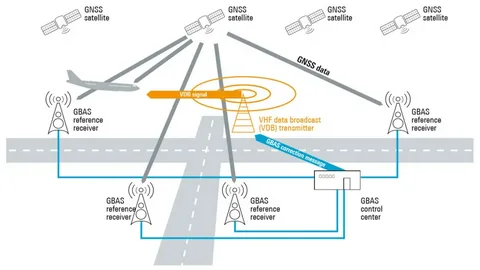
Differential GNSS (DGNSS) and Real-Time Kinematic (RTK) techniques provide corrections in real-time to improve positioning accuracy. These methods rely on reference stations that continuously monitor GNSS signals and broadcast corrections to nearby receivers.
Conclusion
Effective GNSS system testing and calibration techniques are essential for maintaining the accuracy, reliability, and integrity of navigation and positioning systems. From field testing to advanced calibration methods, engineers employ multiple strategies to ensure GNSS devices meet performance standards. As GNSS applications continue to expand, the importance of rigorous testing and precise calibration will only grow.
