


Introduction
Navigation has always been a critical part of human progress, from ancient seafaring to modern aerospace exploration. One of the most significant breakthroughs in this field is the development of inertial-based guidance technologies. The Evolution of Inertial Navigation System Over the Years reflects a journey of continuous innovation, moving from bulky mechanical devices to highly precise, compact digital systems used in aircraft, spacecraft, submarines, and even smartphones.
This article explores how these systems developed, the technologies that shaped them, and their modern-day applications.
Early Beginnings of Inertial Navigation
The roots of inertial navigation can be traced back to the early 20th century, when engineers began experimenting with gyroscopes to maintain directional stability. These early systems were mechanical in nature and relied heavily on spinning rotors to detect changes in orientation.
During World War II, the need for more accurate missile guidance and aircraft navigation accelerated research. These early inertial systems were large, expensive, and prone to drift errors, but they laid the foundation for future improvements.
At this stage, The Evolution of Inertial Navigation Systems Over the Years was just beginning, driven primarily by military demands and the limitations of radio-based navigation.
The Rise of Electronic and Analog Systems
By the 1950s and 1960s, inertial navigation technology began to incorporate electronic components. Analog computing systems replaced purely mechanical calculations, improving accuracy and response time.
These systems were widely used in:
- Military aircraft
- Submarines
- Early ballistic missile systems
One of the most notable advancements during this period was the development of stable platform systems, which used gyroscopes to keep a reference frame fixed in space. Although still expensive and complex, these systems significantly improved navigational reliability.
This phase marked an important milestone in The Evolution of Inertial Navigation Systems Over the Years, as technology transitioned from mechanical to electromechanical solutions.
Digital Revolution and Microelectronics
The introduction of digital computers in the 1970s and 1980s revolutionized inertial navigation. Microprocessors allowed real-time calculations and error corrections, dramatically improving system performance.
Key innovations included:
- Ring laser gyroscopes (RLGs)
- Fiber optic gyroscopes (FOGs)
- Accelerometers with higher sensitivity and stability
These advancements reduced system size and cost while increasing accuracy. Aircraft such as commercial airliners began integrating inertial navigation systems (INS) with satellite-based navigation for redundancy and precision.
During this era, The Evolution of Inertial Navigation Systems Over the Years became closely tied to the rise of digital avionics and computer-assisted navigation.
Integration with GPS and Hybrid Systems
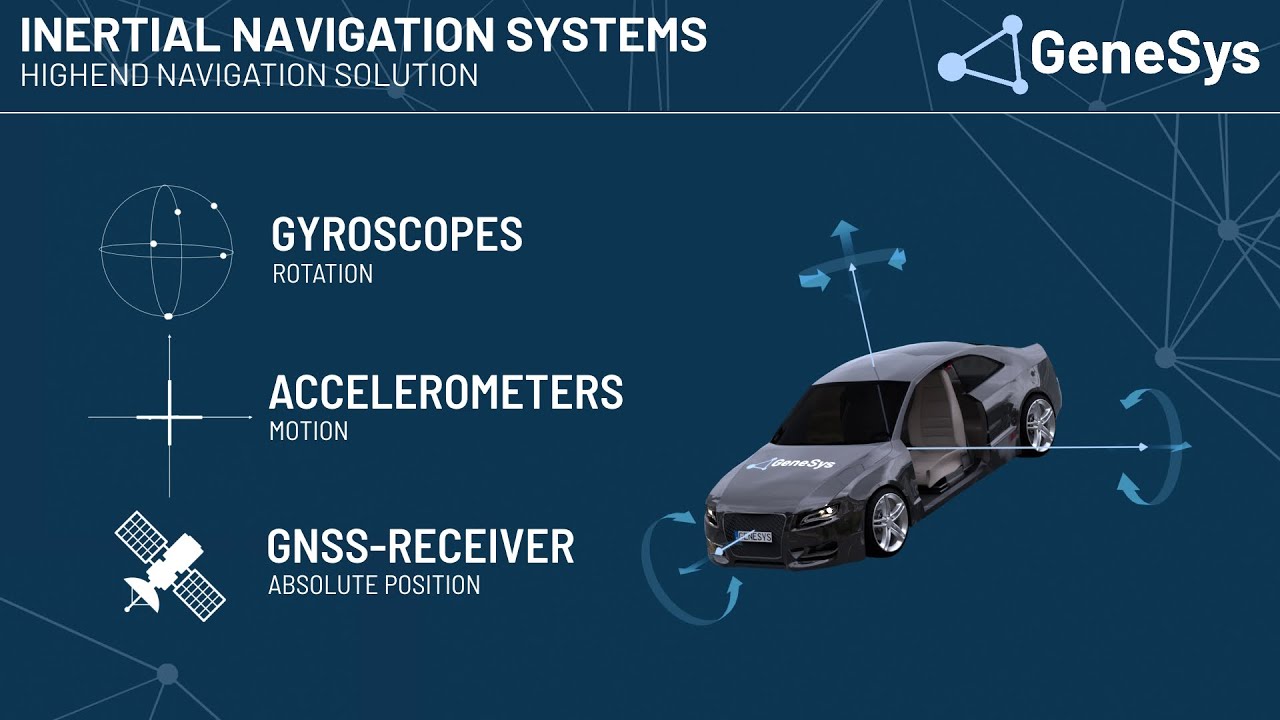
The 1990s and 2000s marked a major turning point as inertial navigation systems were integrated with Global Positioning System (GPS) technology. While INS could operate independently of external signals, it suffered from drift over time. GPS, on the other hand, provided absolute position updates but was vulnerable to signal loss.
By combining both systems, engineers created hybrid navigation solutions that offered:
- Continuous positioning even during GPS outages
- Higher accuracy through sensor fusion
- Improved reliability for military and commercial applications
This integration significantly advanced The Evolution of Inertial Navigation Systems Over the Years, making modern navigation systems far more robust and dependable.
Modern Inertial Navigation Systems
Today’s inertial navigation systems are compact, highly accurate, and widely used across multiple industries. MEMS (Micro-Electro-Mechanical Systems) technology has enabled the production of tiny sensors that fit into smartphones, drones, and wearable devices.
Modern applications include:
- Autonomous vehicles
- Aerospace exploration missions
- Drone navigation
- Robotics and industrial automation
- Smartphone motion sensing
Advanced algorithms such as Kalman filtering are now used to correct drift and combine data from multiple sensors, including accelerometers, gyroscopes, and magnetometers.
At this stage, The Evolution of Inertial Navigation Systems Over the Years demonstrates how far the technology has come—from massive mechanical platforms to invisible embedded sensors guiding everyday devices.
Challenges and Limitations
Despite significant advancements, inertial navigation systems still face challenges:
- Drift accumulation: Small errors grow over time without external correction.
- Cost of high-precision systems: Aerospace-grade INS units remain expensive.
- Complex calibration: Requires careful tuning and integration with other sensors.
Researchers continue to work on improving accuracy, reducing cost, and enhancing long-term stability.
Future of Inertial Navigation
The future of inertial navigation lies in deeper integration with artificial intelligence, quantum sensors, and advanced sensor fusion techniques. AI-driven algorithms are expected to further reduce drift and improve predictive accuracy.
Emerging technologies may include:
- Quantum inertial sensors
- AI-based error correction models
- Fully autonomous navigation systems without GPS dependency
As these innovations develop, The Evolution of Inertial Navigation Systems Over the Years will continue to be a story of increasing precision, miniaturization, and intelligence.
Conclusion
From mechanical gyroscopes to AI-enhanced microchips, inertial navigation has undergone a remarkable transformation. Its evolution reflects broader technological progress in computing, electronics, and aerospace engineering.
Ultimately, The Evolution of Inertial Navigation Systems Over the Years showcases how a once bulky and specialized military technology has become a foundational element of modern navigation systems used in everyday life.
